Blog

Should You Let Amazon Manage Your Entire Supply Chain?
Amazon is a powerful logistics engine, but should you let it manage your entire supply chain? The real question is: choose more speed or control?

How to Calculate Aged Inventory & Reduce Slow-Moving Stock
Learn how to calculate aged inventory, read an inventory aging report, and reduce slow-moving stock with proven disposition tactics from NovEx.

Direct to Consumer Fulfillment (D2C): A Complete Guide
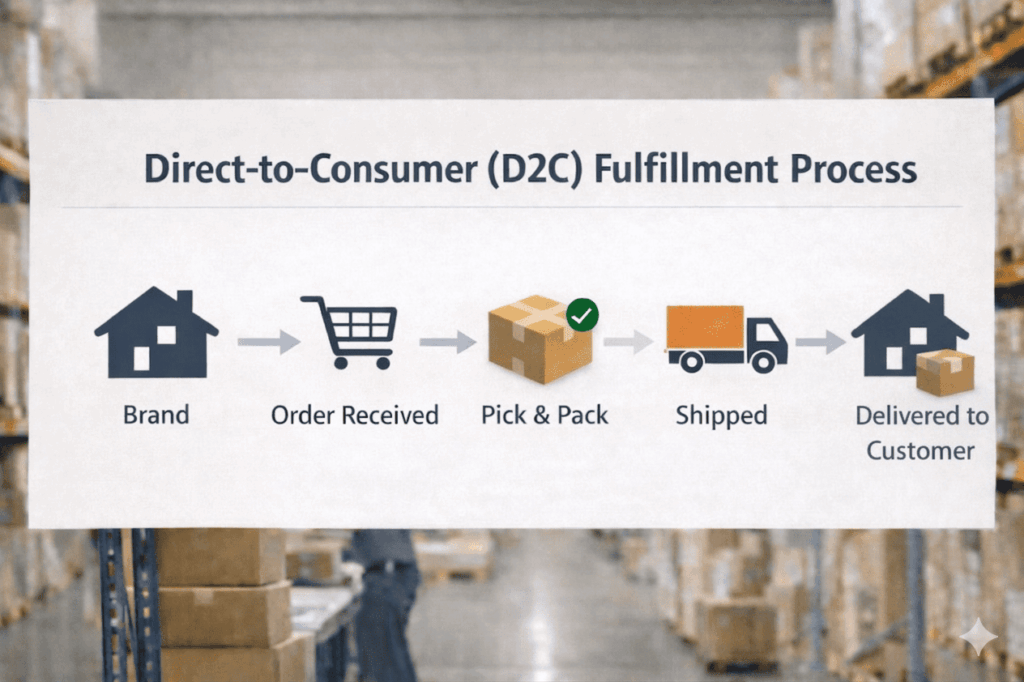
Direct-to-consumer fulfillment (D2C) has become a defining advantage for modern eCommerce brands. Every touchpoint with your customers shapes perception and profitability. This guide breaks down how D2C fulfillment works, where brands struggle, and how to build a scalable, cost-efficient operation that supports growth without compromising customer experience or margins. TL;DR D2C fulfillment enables brands to sell and ship directly to their customers, controlling experience, data, and margins. Growth often exposes operational gaps in capacity, systems, and fulfillment strategy. Core challenges include last-mile delivery, forecasting, returns, and system integration. Brands can choose between in-house, FBA, 3PL provider fulfillment, or dropshipping models

What Does Awaiting Fulfillment Mean? Why It Happens + Fixes
Order statuses shape how both operators and customers understand order fulfillment progress. One of the most commonly misunderstood stages is “awaiting fulfillment”. Getting this stage’s meaning right helps you identify delays early, align operations, and maintain a consistent delivery experience for your customers. TL;DR Awaiting fulfillment means the order is confirmed but not yet picked or packed. Delays in shipments are usually caused by inventory, workflow, or system issues. Prolonged awaiting fulfillment status impacts customer experience and operational efficiency. Fixes involve better visibility, process optimization, and proactive fulfillment execution. What Does “Awaiting Fulfillment” Mean? The awaiting fulfillment meaning refers to

Days Sales in Inventory (DSI): How to Calculate + Formula
Days Sales in Inventory sits at the intersection of logistics and finance, connecting inventory performance with capital efficiency. By tracking it consistently, you gain visibility into cash flow, operational performance, and demand alignment. These insights help you make smarter decisions across purchasing, fulfillment, and inventory management as your business scales. TL;DR Days Sales in Inventory measures how long it takes to convert stock into revenue and impacts cash flow directly. Tracking the Days Sales in inventory ratio over time reveals efficiency trends and operational risks. The DSI formula uses inventory, COGS, and time to calculate turnover speed. DSI benchmarks vary

How To Choose A 3PL Provider For Ecommerce Fulfillment
Choosing the right logistics partner can determine how efficiently your ecommerce business scales. If you are wondering how to choose a 3PL provider, the answer goes beyond price. The right partner combines operational expertise, technology, and strategic warehouse locations to support reliable fulfillment, faster delivery, and sustainable ecommerce growth. TL;DR A 3PL provider manages warehousing, inventory, and order fulfillment, while a 4PL oversees the entire supply chain. Most ecommerce brands benefit more from a strong operational 3PL than a full 4PL structure. Key benefits of working with a 3PL include scalability, technology access, carrier networks, and lower operational costs. When

What Is Omnichannel Fulfilment? Process, Strategies & Examples
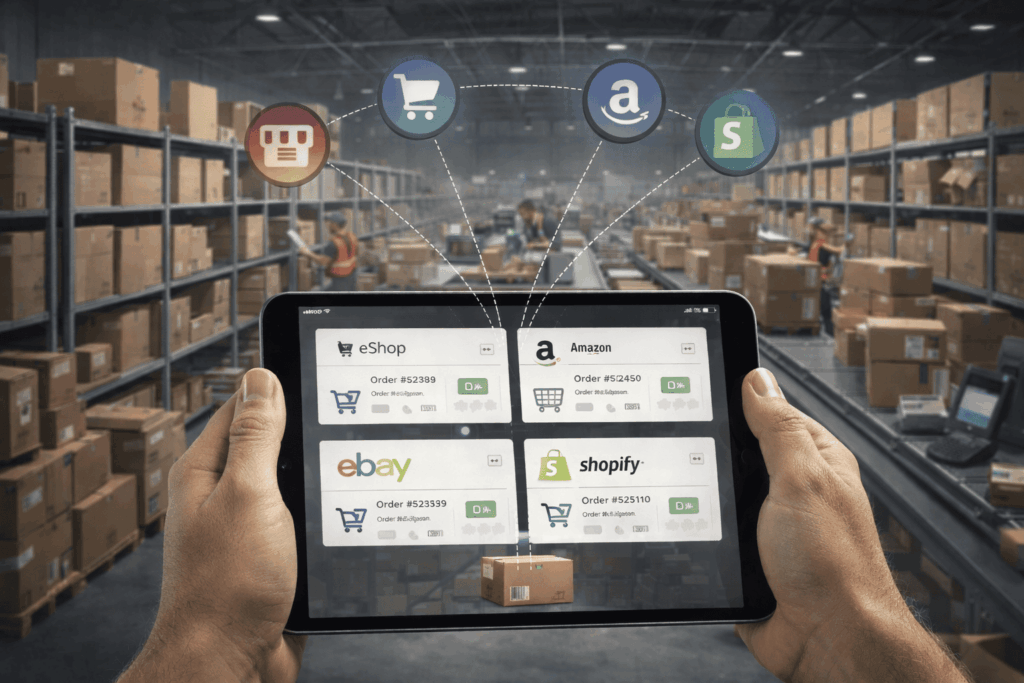
Modern shoppers value flexibility. They buy online, pick up from PO boxes, and return products to your brick-and-mortar stores. Omnichannel fulfillment makes this possible by connecting inventory, order processing, and delivery across every sales channel. With the right omnichannel ecommerce fulfillment strategy, brands coordinate storage, picking, shipping, and returns through one unified system, delivering faster service, consistent experiences, and stronger customer loyalty. TL;DR Omnichannel fulfillment connects inventory, order processing, and delivery across ecommerce stores, marketplaces, and physical stores using one synchronized system. Unlike multichannel fulfillment, it operates from a shared inventory pool with unified workflows. Key operational pillars include real-time

What are Fulfillment Services and How They Can Help Your Small Business
TL;DR Fulfillment services handle storage, packing, shipping, and returns so businesses can focus on growth and customer engagement. The order fulfillment process includes receiving inventory, warehousing, order processing, picking, packing, shipping, and returns management. Consider outsourcing when order volume grows, shipping takes too much time, inventory management is complex, or you want faster delivery and global reach. Choosing the right provider, like NovEx, improves efficiency, reduces costs, and ensures fast, accurate delivery across multiple platforms and regions. Fulfillment services are a cornerstone of modern eCommerce and small business operations. At their core, fulfillment services handle the storage, packing, and shipping

How To Optimize Your Order Fulfillment Process
Key Takeaways Order fulfillment optimization improves how orders are received, picked, packed, shipped, tracked, and delivered. Better inventory visibility, warehouse layout, packing rules, and automation can reduce delays, errors, and fulfillment costs. Tracking KPIs like order accuracy, on-time shipping, inventory accuracy, and cost per order helps identify where the process needs improvement. Working with a 3PL can help businesses scale fulfillment, improve shipping efficiency, and create a smoother customer experience. Order fulfillment optimization is about making every step of the process work better, from receiving an order to picking, packing, shipping, and delivery. For eCommerce brands, manufacturers, and direct sellers,

Warehouse Types Explained: Examples, Uses & Features
Warehouses support storage, inventory control, distribution, and order fulfillment across many industries. From highly automated facilities to temperature-controlled storage and government-regulated spaces, the different types of warehousing serve very specific operational needs. Choosing the right setup directly impacts efficiency, compliance, and customer experience. In this guide, we break down the 10 most common warehouse types, with clear warehouse examples, practical uses, and key features to help you decide which one best fits your operation. 10 Different Types Of Warehouses You Need To Know Below are the most common types of warehouses in supply chain management. 1. Private warehouses A private

Outsourced Fulfillment: Complete Guide For Growing Brands [2026]
Outsourced fulfillment has become a critical growth lever for modern e-commerce brands. In 2026, fast delivery expectations, rising logistics costs, and operational complexity make the right fulfillment partner a strategic advantage. This guide explains how outsourced fulfillment works and how it helps brands scale confidently. What Is Outsourced Fulfillment? Outsourced fulfillment is the practice of partnering with a specialized third-party provider to manage your end-to-end order lifecycle, from receiving and storing inventory to picking, packing, and final delivery. Instead of building internal warehousing and distribution operations, brands rely on outsourced fulfillment services to streamline logistics, improve speed, and elevate

FIFO vs LIFO vs FEFO: Choosing The Right Inventory Rotation Method
Effective inventory rotation is one of the most overlooked drivers of financial performance, operational efficiency, and customer satisfaction. For fast-scaling retail and e-commerce brands, the right method determines how quickly products move through the warehouse, how much aging inventory accumulates, and whether customers receive items that are fresh, compliant, and aligned with brand expectations. So, what does FIFO refer to? What does FEFO stand for, and what is the difference between FIFO, LIFO, and FEFO? Understanding FIFO, LIFO, and FEFO, and knowing which one fits your business, is essential. Each method has a unique purpose, a distinct cost impact, and

E-Commerce Outsourcing: A Complete Guide For Retail Brands
Running an e-commerce brand today means navigating rising consumer expectations, rapid shipping standards, and an increasingly complex digital and physical supply chain. As brands scale, so do operational demands – often faster than internal teams can keep up. That’s why more retail leaders are turning to e-commerce outsourcing to streamline operations, reduce costs, and unlock capacity for growth. This guide breaks down what outsourcing e-commerce actually involves, the challenges and benefits you should anticipate, when to make the shift, and how partnering with the right 3PL can transform your ecommerce fulfillment performance. What Is E-commerce Outsourcing? E-commerce outsourcing means hiring

The Inventory Management Process & How To Improve It
Inventory is one of the most powerful levers of operational performance. When the inventory management process runs smoothly, brands unlock healthier cash flow, faster fulfillment, stronger customer satisfaction, and a supply chain that supports growth. But when it breaks down, operational disruptions, excess carrying costs, and lost sales quickly follow. Every business needs a reliable inventory management workflow that keeps products moving, teams aligned, and customers happy. Below, we break down what the inventory process flow includes, the five essential steps you need to master, and practical ways to optimize every stage. What Is Inventory Management? Inventory management involves monitoring

What Is Kitting? Process Explained & Benefits
Kitting in warehousing has become one of the most effective ways for modern businesses to streamline operations, reduce fulfillment time, and deliver a better customer experience. As supply chains grow more complex and customer expectations increase, companies are looking for operational practices that help them stay fast, accurate, and scalable. One of the most impactful of these practices is kitting; a process of combining multiple items into one ready-to-ship SKU. If you’ve ever offered a gift set, shipped a subscription box, or prepared materials in advance, you’ve already interacted with the core principles of kitting. In this article, we break

What Is Amazon FBA & How Does It Work? Tips To Increase Sales
Do you find yourself wondering what FBA is or what it stands for? If so, we’re here to unwrap what this popular e-commerce acronym stands for: Fulfillment by Amazon (FBA). It’s a powerful program that lets you tap into Amazon’s world-class logistics so your products can reach customers fast, reliably, and at scale. Below, we’ll take a deeper look at what Amazon FBA is and how it works, how to get started, costs, pros and cons, and practical tips to boost conversions and increase sales. After that, you can decide whether this model matches your goals and margin structure. What

Warehousing And Distribution: Understanding The Differences
In every growing business, warehousing and distribution sit at the heart of the supply chain. They represent how efficiently your business can meet customer demand, scale operations, and sustain profitability. Understanding the difference between a warehouse and a distribution center, and how each contributes to your operations, helps you design a logistics strategy that’s resilient, cost-efficient, and customer-centric. Let’s break things down. What Is Warehousing And Distribution? Warehousing refers to the storage and management of goods in a designated facility until they are needed for manufacturing, order fulfillment, or retail delivery. It is the bridge between production and consumption, where

B2B Fulfillment: What It Is, How It Works & Strategies
Every successful business shares one common trait: reliability. Whether you’re supplying retailers, wholesalers, or other enterprises, the ability to deliver large-volume orders with accuracy and consistency defines how your business is perceived. In this guide, we unpack what B2B fulfillment really is, how it differs from B2C operations, and the strategies that help you overcome challenges and scale with confidence. What Is B2B Fulfillment? In essence, B2B fulfillment refers to the process of receiving, processing, and shipping orders from one business to another; for example, a manufacturer, distributor, or supplier sending apparel to a retailer, department store, or boutique. Unlike