
Global parcel volume is projected to reach 421 billion packages in 2026, and every one of those orders raises the bar for faster, more reliable fulfillment. Particularly when a box or pallet exceeds standard size or weight thresholds, it moves out of the easy lane. Standard rates no longer apply, surcharges start adding up, and one inaccurate measurement can turn into a chargeback, delay, or refused delivery.
Large-item shipping gets expensive when size, weight, and handling requirements are not planned correctly. The right approach starts with understanding carrier thresholds, choosing the right service level, and packing each item for the journey ahead. This guide walks through how to ship large and heavy parcels without overpaying, slowing delivery, or increasing damage risk.
TL;DR
- Know thresholds first. USPS caps parcels at 70 lbs; UPS and FedEx Ground stop at 150 lbs; anything heavier moves as freight.
- Measure and classify before you quote. Dimensional weight and freight class decide what you pay.
- Match the method to the box. Flat-rate for dense items, ground for most parcels, regional carriers for short hauls, LTL freight for pallets.
- Pack for handling, not storage. Double-walled boxes, real cushioning, and palletizing prevent the damage heavy items are prone to.
- Distance is a cost lever. Zone-based pricing means where you ship from matters as much as how you pack.
- Surcharges are the silent cost. Additional handling, oversize, and residential fees can quietly double a heavy shipment’s total.
What Happens When a Package Becomes Large, Heavy, or Oversized
These three words get used interchangeably, but carriers price them differently, so it makes sense to separate them.
- A large item takes up significant space without necessarily being heavy, like flat-pack furniture, a treadmill, or a big-screen TV.
- A heavy item is dense enough to need two people or equipment to move; once a load passes roughly 50 pounds, carriers start adding handling fees.
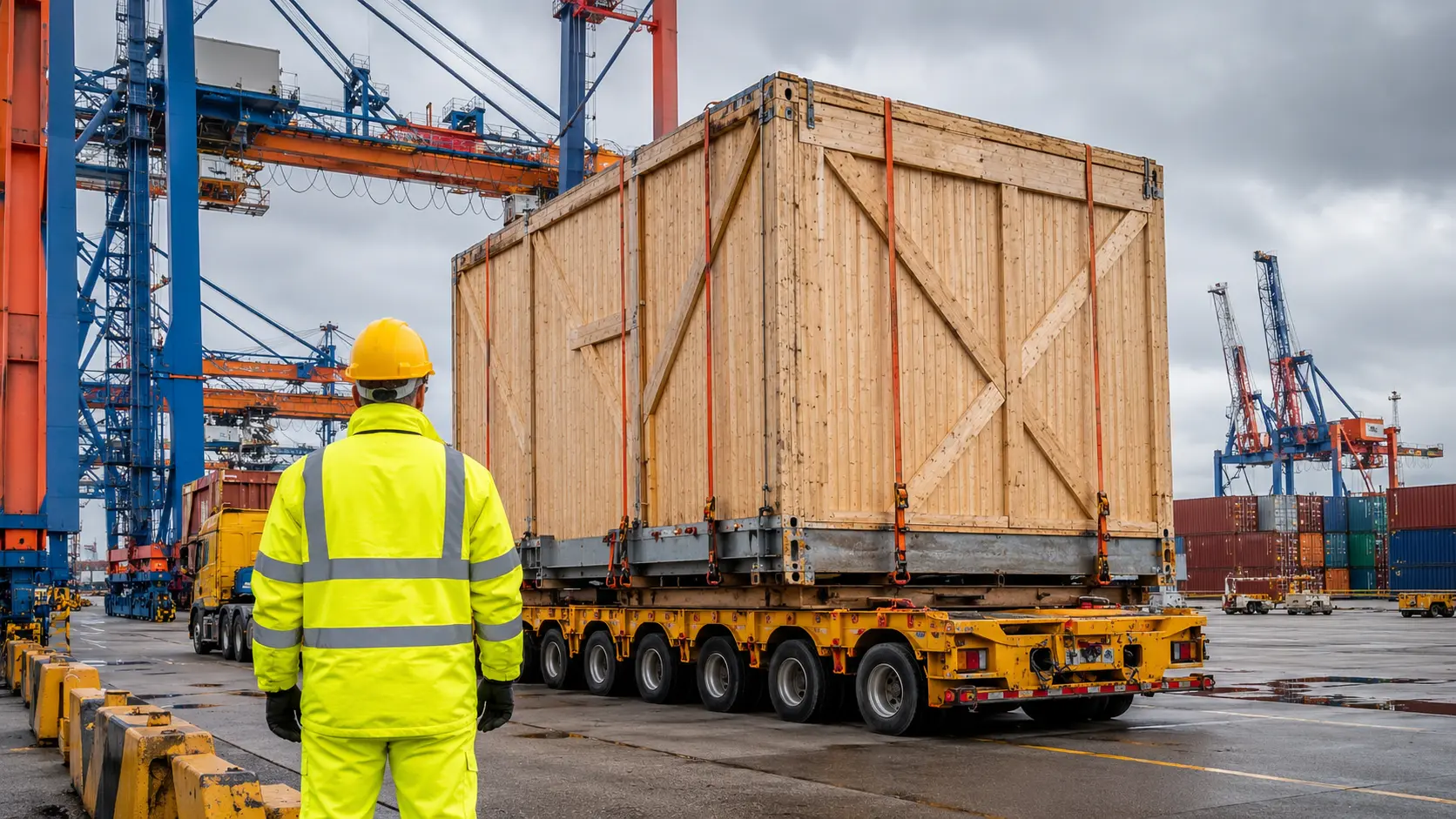
Shipping oversized items (also known as out-of-gauge cargo) means exceeding a carrier’s standard size limits, which usually forces special handling or freight.
The hard numbers come from the carriers themselves. USPS won’t accept a parcel over 70 pounds or more than 108 inches in combined length and girth – girth being the distance around the thickest part of the box. Cross either limit and the package is either rejected or reclassified at a higher price. Knowing which bucket your item falls into is the first step in working out how to ship oversized items at a sane cost.
Measuring, Weighing, and Classifying Parcels
Before you can answer how much it costs to move a bulky shipment, you need three numbers:
- dimensions,
- actual weight,
- density (for freight).
Carriers don’t bill on weight alone. Dimensional weight (or DIM weight) charges you for the space a box occupies, calculated from its length, width, and height. A light-but-bulky carton can be billed as if it weighed far more, which is why a tightly packed box almost always beats an oversized one. That’s what makes a right-sized pick and pack workflow such a reliable cost saver.
For shipments over 150 pounds that travel as freight, pricing shifts to freight class; a number from 50 to 500 set by the National Motor Freight Traffic Association based on density, stowability, handling, and liability. The denser and easier to handle the freight, the lower the class and the lower the rate.
So if you’re sorting out how to ship a large package accurately, measure it as it will actually ship (packaging included) and record the girth. Guessing is what produces reweighs and reclassification charges.
Avoid those charges by working with a 3PL that knows where the thresholds sit before the shipment leaves the floor.
Shipping Options for Large Items: From Parcel to Freight
There’s no single best carrier. The right shipping options for large items depend on weight, distance, and how fast the box needs to arrive. Here’s how the main methods compare.
Method | Best for | Weight range | Key limits & notes |
USPS Flat Rate | Dense, compact items | Up to 70 lbs | Fixed domestic price only in USPS Flat Rate packaging |
USPS Ground Advantage | Budget parcels under USPS limits | Up to 70 lbs | Max 130 inches length + girth; DIM weight may apply |
UPS / FedEx Ground | Large parcels still under parcel limits | Up to 150 lbs | Max 108 inches long and 165 inches length + girth; watch DIM, oversize, and handling fees |
Regional carriers | In-network residential/ecommerce deliveries | Varies by carrier | Can be cheaper in covered zones, but weight, size, and geography vary sharply |
LTL freight | Pallets, crates, multi-carton heavy shipments | Usually 150 lbs+ | Requires freight class, pallet dimensions, accessorial planning, and delivery-site details |
When you’re working out how to ship large heavy items above the 150-pound parcel ceiling, or how to ship very large items that won’t fit any box, the answer is freight. Less-than-truckload (LTL) consolidates your palletized shipment with others, so you pay only for the space you use. It’s the most economical route for shipping large packages by the pallet, with the trade-off of longer transit and curbside delivery.
How to Pack Large Boxes and Heavy Parcels for Transit
Packing is the first line of defense for large and heavy shipments. The heavier the item, the harder it hits during transit. So packaging needs to be built for real handling, not ideal handling. Here are some tips for protective packing:
- Use a new, double-walled corrugated box; a used box has weakened walls.
- Seal every seam with heavy-duty tape.
- Reinforce the top and bottom.
- Fill all empty space with cushioning so nothing shifts.
- For anything fragile or irregular, edge protectors or a wooden crate can help.
- Once an item or a stack of boxes passes what one person can safely lift, palletize it: a sturdy pallet, banded or shrink-wrapped, is far easier to load, move, and protect.
- Label the outside clearly, including a “HEAVY” mark for anything over 70 pounds, which carriers require.
If you ship the same large items repeatedly, you can test your packaging against a recognized standard. There are drop, vibration, and compression tests that tell you whether a box will survive the parcel network before you find out the expensive way. Shipping large boxes that consistently pass those tests is how you keep claims and returns down.
Shipping Large Items Across the Country Without Overpaying
Distance is the cost lever most people underestimate. Every major carrier uses zone-based pricing, so a 60-pound box shipped coast to coast can cost far more than the same box going two states over. That’s the core challenge of shipping large items across the country: weight and size set the base rate, but distance multiplies it.
A few moves keep those costs down:
- Choose ground over air whenever speed allows; for heavy items, ground can cost half as much.
- Split a borderline shipment into two smaller boxes when doing so dodges an oversize surcharge.
- Think about where your inventory sits: warehousing stock closer to your customers shrinks the zones every order travels, which is exactly why distributed and bicoastal fulfillment networks exist.
- Zone skipping (moving a bulk load most of the way by truck before injecting it into the local carrier network) trims cost further on high-volume lanes.
Large Parcel Shipping With a Partner Built for Throughput
For brands shipping bulky or heavy products at volume, the question shifts from “which box” to “which operation”. NovEx runs bicoastal fulfillment centers in Salt Lake City and Memphis, positioning inventory so that heavy parcels travel fewer zones and reach most of the U.S. in two days.
Speed matters, but with heavy freight, getting the packaging, labeling, and paperwork right matters more. With the right operation behind them, heavy and oversized shipments can move with the same control, visibility, and accountability as any other shipment. Let’s handle the movement of large and heavy items together. Request a quote.
FAQs
How do I ship large items on eBay?
Measure and weigh the item packed, then choose eBay’s standard, freight, or local pickup option. For oversized goods, quote freight before listing and protect margin with proper packaging, labeling, and delivery-site details upfront from the start.
How much does it cost to ship large items?
Cost depends on actual weight, dimensional weight, distance, carrier, and surcharges. A 50-pound box moving through nearby UPS or FedEx Ground zones may land around $30-$40 before added fees, but shipping large items cross-country, residential delivery, oversize dimensions, and handling surcharges can push the final cost much higher.
When do I need freight instead of a parcel?
Once a single piece exceeds 150 pounds (the ground limit for UPS and FedEx) or won’t fit standard box dimensions, it moves as LTL freight on a pallet. Freight also wins on per-pound cost for bulky loads.
How can I avoid oversize surcharges?
Right-size your packaging and check combined length and girth against each carrier’s limits before shipping. Splitting one oversized box into two compliant boxes often costs less than a single oversize-flagged shipment. The best way to ship large boxes is working with a 3PL that already understands the thresholds, rate differences, and packing choices, and knows how to keep large orders cost-efficient. Talk to NovEx for more information.
What should I look for in a partner for heavy shipments?
Prioritize warehouse locations that cut your shipping zones, proven freight and palletizing capability, and transparent pricing. The right 3PL should reduce both your cost-per-order and your damage claims.