
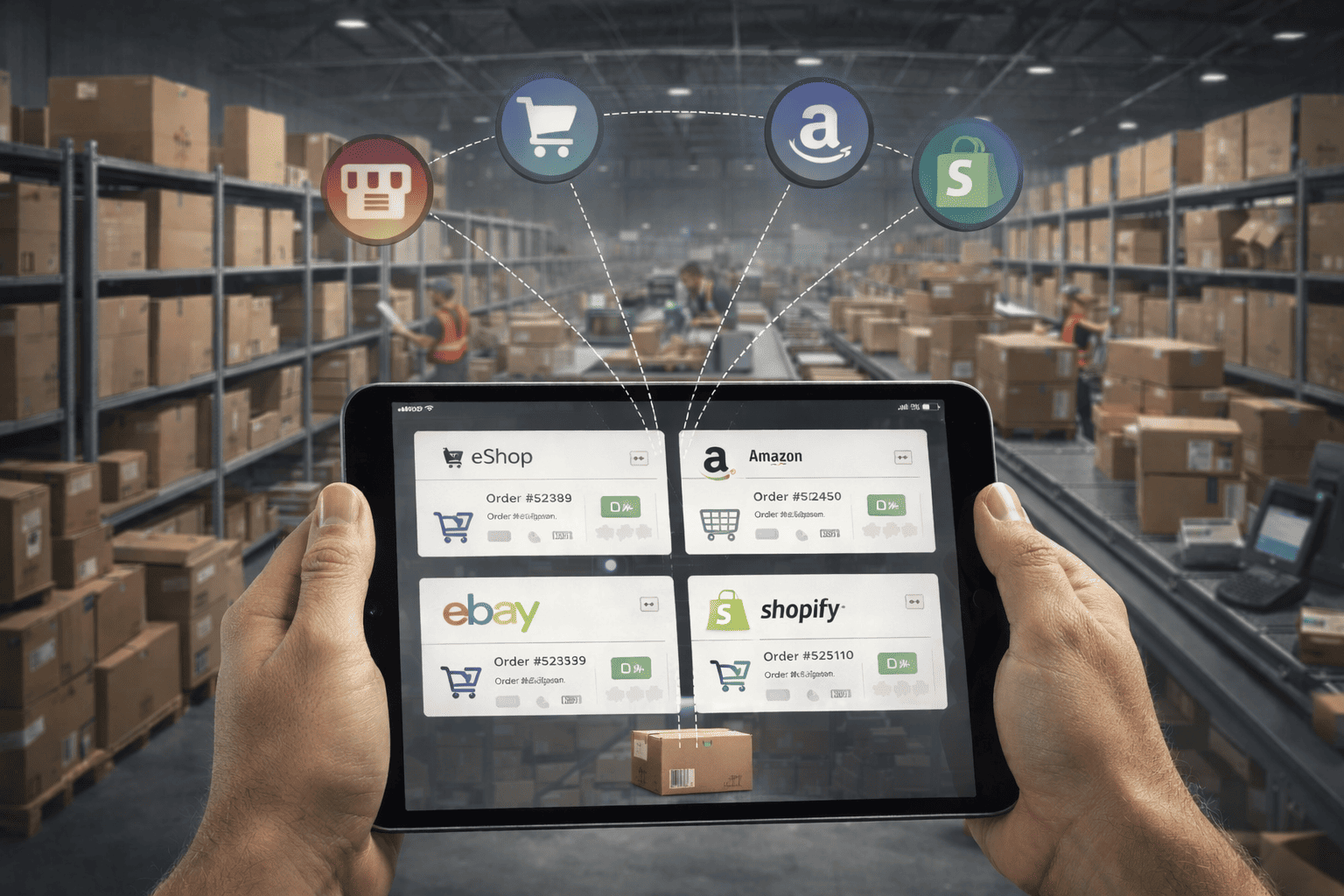
Modern shoppers value flexibility. They buy online, pick up from PO boxes, and return products to your brick-and-mortar stores. Omnichannel fulfillment makes this possible by connecting inventory, order processing, and delivery across every sales channel.
With the right omnichannel ecommerce fulfillment strategy, brands coordinate storage, picking, shipping, and returns through one unified system, delivering faster service, consistent experiences, and stronger customer loyalty.
TL;DR
- Omnichannel fulfillment connects inventory, order processing, and delivery across ecommerce stores, marketplaces, and physical stores using one synchronized system.
- Unlike multichannel fulfillment, it operates from a shared inventory pool with unified workflows.
- Key operational pillars include real-time inventory accuracy, safety stock planning, order routing, and integrated WMS or OMS technology.
- Popular strategies include BOPIS, ship-from-store, ship-to-home, marketplace fulfillment, and 3PL fulfillment.
- When executed well, omnichannel ecommerce fulfillment improves delivery speed, customer experience, operational efficiency, and revenue growth.
What is Omnichannel Fulfillment?
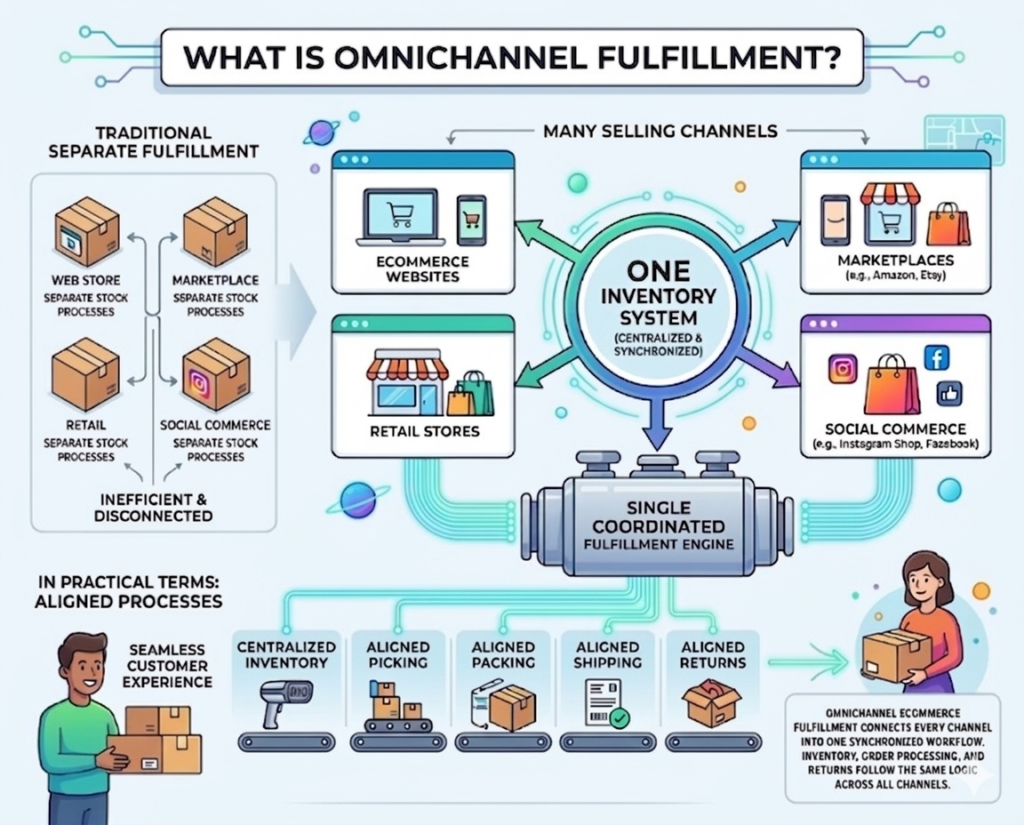
Omnichannel fulfillment includes one inventory system, many selling channels, and a single coordinated fulfillment engine behind them all. Instead of managing separate stock and processes for each channel, omnichannel ecommerce fulfillment connects marketplaces, websites, retail, and social commerce into one synchronized workflow.
In practical terms, omni channel fulfillment centralizes inventory and aligns picking, packing, shipping, and returns across every channel. This ensures that inventory, order processing, and returns follow the same logic across channels, creating a seamless customer experience.
Multichannel vs. Omnichannel Fulfillment
Both multichannel and omnichannel fulfillment involve selling through multiple sales channels. The difference lies in how those channels operate behind the scenes.
In multichannel fulfillment:
Each channel typically runs its own inventory and order workflows. Marketplace orders, retail shipments, and ecommerce purchases may rely on separate stock pools and fulfillment processes. This expands reach but often creates fragmented logistics and inconsistent customer experiences.
In omnichannel fulfillment:
Orders run on a unified system. A shared inventory pool supports all channels – DTC stores, marketplaces, retail partners, and social commerce – within one coordinated omni channel fulfillment strategy. Orders are routed dynamically, inventory updates instantly across channels, and fulfillment maintains consistent service regardless of where customers purchased from.
👉🏻 The key distinction is integration. When a business expands distribution, omnichannel ecommerce fulfillment connects the entire operation into one synchronized ecosystem.
Challenges Of Omnichannel Fulfillment
The more channels a brand sells through, the harder it becomes to maintain a consistent customer experience. While omnichannel fulfillment unlocks powerful growth opportunities, it also raises the operational bar. Brands need to synchronize inventory across many channels, coordinate logistics often between multiple nodes, and maintain fast, accurate order processing.
Real-time inventory accuracy
In omnichannel fulfillment operations, inventory has to remain accurate. Without real-time synchronization, brands risk overselling or duplicating SKUs across channels. To overcome this challenge, you’ll need to centralize inventory data within a unified WMS or OMS that updates stock levels instantly across every sales channel and fulfillment location. This way you will maintain reliable available-to-sell inventory and prevent stock discrepancies.
Safety stock thresholds
Demand forecasting becomes more complex when orders originate from marketplaces, ecommerce stores, retail locations, and social commerce simultaneously. You’ll need a well-calculated safety stock buffer to protect omnichannel order fulfillment from sudden demand spikes, shrinkage, or channel-specific volatility.
Building the right technology infrastructure
Legacy systems make omnichannel fulfillment extremely difficult. Manual inventory tracking or disconnected software creates delays, inaccuracies, and operational blind spots. Modern omnichannel fulfillment solutions rely on WMS, OMS integrations, barcode scanning, and automation to coordinate inventory, picking, packing, and shipping across all channels. Yet, building the right infrastructure may be time consuming and costly. It would be better if you chose to work with a fulfillment center that has all this technology already in place.
Complexity of operations
Omnichannel fulfillment operations become significantly more complex as additional requirements enter the system. Returns management, regulated products, temperature-controlled inventory, multimodal shipping, and real-time tracking requests all add operational layers.
Maintaining accuracy and speed in such complex supply chains becomes difficult without specialized infrastructure. This is why many brands rely on professional omnichannel fulfillment solutions from experienced 3PL partners who can coordinate these processes better.
Order routing
Effective fulfillment depends on intelligent order routing. Businesses have to establish clear rules that determine which warehouse ships each order, based on factors like:
- inventory availability,
- customer proximity,
- service commitments,
- shipping efficiency,
- cost.
When routing logic is well designed, it accelerates delivery, reduces transportation expenses, and keeps omnichannel ecommerce fulfillment operations scalable as sales channels and order volumes grow.
What Is An Example Of An Omnichannel Strategy?
Imagine a customer discovering a new skincare product while browsing a brand’s TikTok page. She clicks the product link and completes the purchase through the brand’s Shopify store. Behind the scenes, the omnichannel ecommerce fulfillment system checks inventory across multiple fulfillment locations.
The order is routed to the nearest warehouse with available stock. Warehouse staff pick, pack, and ship the product the same day while inventory updates automatically across the brand’s website, Amazon store, and retail allocations.
A few days later, the customer decides to return the item at a physical retail partner location. The returned product is scanned, inventory updates in the central system, and it becomes available for resale.
👌This is a well-calibrated omni-channel fulfillment process: one unified system coordinating inventory, orders, shipping, and returns across every sales channel and warehousing point.
The Omnichannel Fulfillment Process In 5 Steps
- First, you need to make your products available across ecommerce stores, marketplaces, social commerce, and retail locations.
- Then, a shared inventory pool is created that will be later managed through a WMS or OMS. This foundation of omni channel fulfillment ensures real-time inventory visibility across warehouses, stores, and online platforms.
- Next, a customer places an order through your website, a marketplace, or social media store. The system processes the order, assessing multiple fulfillment scenarios, in terms of delivery speed and cost control.
- Routing logic assigns each order to the optimal fulfillment location based on inventory availability, proximity, and service levels. After picking the SKUs, the order is packed and moved to the outbound dock for shipment.
- Lastly, customers receive shipping confirmations and tracking updates, while operational data across channels feeds analytics that help you refine your strategy over time.
8 Types Of Omnichannel Fulfillment Strategy
1. Ship from store
In this type, retail stores function as local fulfillment nodes. Orders placed online are automatically routed to the nearest store with available inventory. Orders then get shipped from the store to the customer’s delivery address or PO box.
2. Buy online, pick up in store (BOPIS)
Customers order online and collect the product at a physical store. This omnichannel fulfillment strategy provides near-instant fulfillment, eliminates shipping costs, and frequently drives additional purchases when customers arrive to pick up their order.
3. Ship to store
Customers order online but choose to collect the item from a store location. This flexible omni channel ecommerce fulfillment option combines ecommerce convenience with physical retail accessibility.
4. Third-party logistics (3PL) fulfillment
5. Dropshipping
In a dropshipping model, the supplier ships products directly to the customer after an order is placed. This reduces inventory holding costs but requires strong system integrations to keep omni channel fulfillment inventory accurate.
6. Buy online, return in store (BORIS)
BORIS allows customers to return online purchases to a physical store, just like the example we discussed above. This improves convenience, speeds up refunds, and helps retailers recover inventory quickly.
7. Marketplace fulfillment integration
Products sold on platforms like Amazon, Walmart, or TikTok Shop are fulfilled through the same inventory system. This keeps logistics synchronized while expanding brand reach across digital marketplaces.
8. Ship to home
This is the classic ecommerce fulfillment model: orders are shipped directly to the customer’s address from a warehouse or nearby fulfillment node.
Benefits Of Omnichannel Fulfillment
- Higher οrder processing efficiency: A unified omnichannel order fulfillment logistics workflow reduces operational friction, improves picking and packing productivity, and helps teams process orders faster.
- Real-time operational visibility: Centralized operations provide continuous reporting across channels, allowing brands to monitor KPIs, track inventory performance, and quickly identify opportunities to optimize fulfillment efficiency.
- Broader revenue streams: Selling across multiple channels within a coordinated omni channel ecommerce fulfillment strategy increases product accessibility, improves conversion rates, and supports sustainable revenue growth.
- Stronger brand presence: Listing products across marketplaces, ecommerce stores, and retail environments expands brand presence while maintaining a consistent customer experience.
- Customer loyalty: Faster delivery options, flexible pickup methods, and accurate inventory visibility help brands meet modern customer expectations and keep customers for the long run.
Deliver Unified Experiences Across All Channels, With NovEx
Delivering a consistent experience across every channel requires more than good intentions. It demands the right operational foundation. With NovEx, you will keep every touchpoint aligned through:
- unified inventory visibility,
- synchronized order fulfillment,
- consistent packaging and service standards.
If your goal is dependable omnichannel fulfillment that safeguards your brand experience wherever customers buy, it’s worth starting a conversation with us. Request a quote
FAQs
What is omni fulfillment?
Omni fulfillment, often called omnichannel fulfillment, coordinates inventory, orders, and shipping across multiple sales channels using one unified system. Orders from DTC platforms, marketplaces, and retail flow through a shared inventory pool, and omnichannel fulfillment operations sync to deliver consistent customer experiences.
How can I use a single inventory pool while selling through multiple channels?
Successful omnichannel order fulfillment relies on a unified inventory pool managed through integrated WMS and ecommerce platforms. This omnichannel fulfillment strategy synchronizes stock levels in real time, allowing brands to sell across DTC, marketplaces, and retail without overselling or fragmenting their inventory.
What role does order routing play in omnichannel fulfillment?
Order routing is central to omnichannel fulfillment operations. It automatically selects the best warehouse based on inventory availability, customer location, and service levels. Effective routing improves delivery speed, lowers shipping costs, and keeps omnichannel ecommerce fulfillment profitable.
What KPIs should businesses track to evaluate omnichannel fulfillment performance?
Key metrics for omni channel ecommerce fulfillment include order accuracy, fulfillment cost per order, delivery time by channel, inventory turnover, and stockout rates. Monitoring these KPIs helps refine your omni channel fulfillment strategy and improve operational efficiency across every sales channel.
What operational challenges arise when scaling from single-channel to omnichannel fulfillment?
Scaling to omnichannel fulfillment introduces challenges such as SKU synchronization, inventory visibility across channels, routing complexity, and technology integration. Without strong omnichannel fulfillment solutions, brands may face stock imbalances, slower shipping, and fragmented data across their fulfillment network.
What does an omnichannel fulfillment operation look like in practice?
Let’s consider an example of a supplements brand selling protein powder and vitamins through its WooCommerce store, Amazon, and several retail partners. All inventory is stored in one fulfillment network and tracked in real time through a centralized WMS.
When a customer orders a vitamin bundle on the brand’s site, the omnichannel order fulfillment system immediately checks inventory across available warehouses. The order routing logic selects the closest facility with the correct SKUs and lot numbers in stock.
Warehouse staff then pick the items using barcode verification, pack them according to the brand’s packaging guidelines, and generate the shipping label. At the same time, inventory levels automatically update across WooCommerce, Amazon, and retail selling points.