
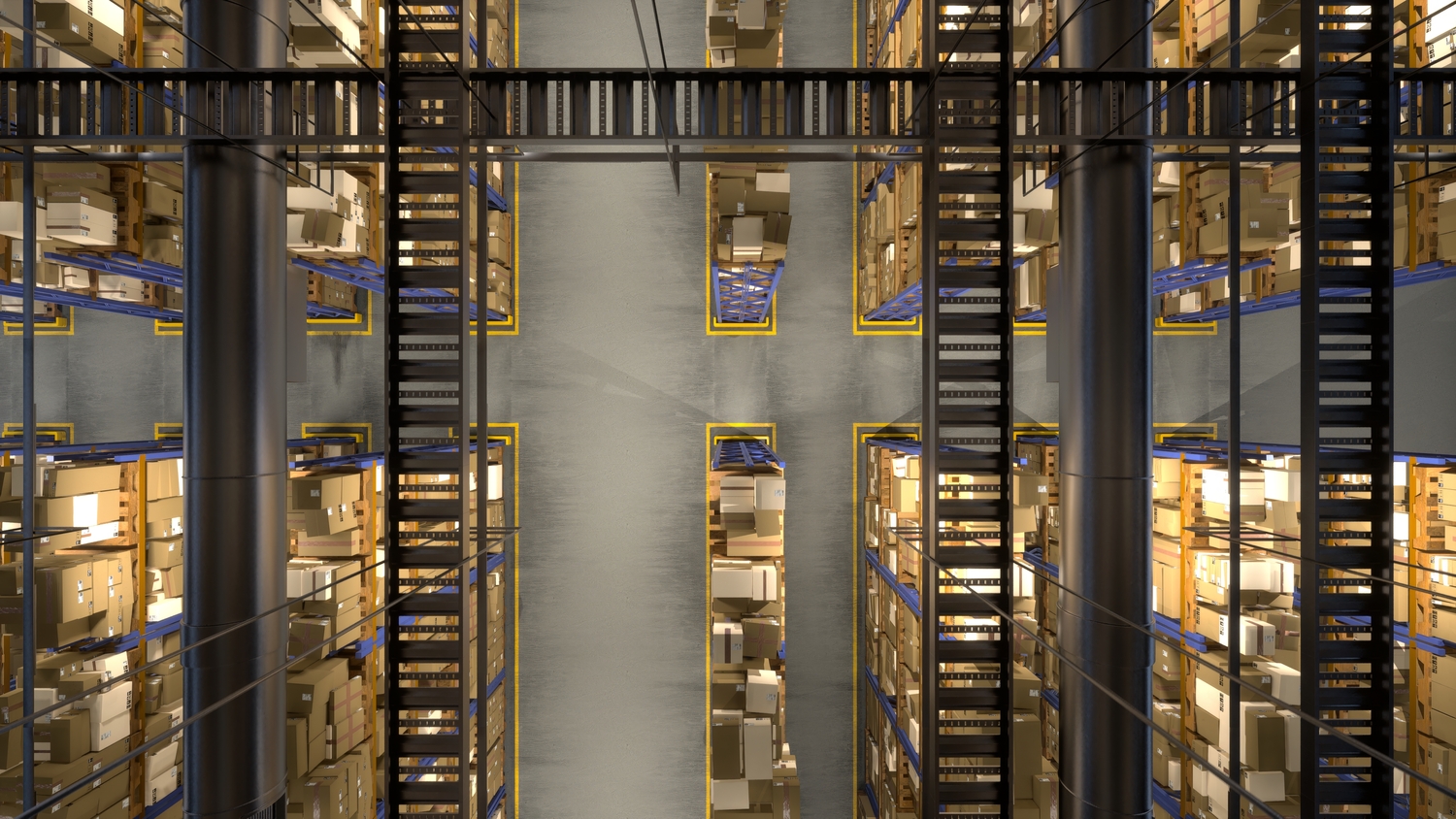
Warehouses support storage, inventory control, distribution, and order fulfillment across many industries. From highly automated facilities to temperature-controlled storage and government-regulated spaces, the different types of warehousing serve very specific operational needs.
Choosing the right setup directly impacts efficiency, compliance, and customer experience. In this guide, we break down the 10 most common warehouse types, with clear warehouse examples, practical uses, and key features to help you decide which one best fits your operation.
10 Different Types Of Warehouses You Need To Know
Below are the most common types of warehouses in supply chain management.
1. Private warehouses
A private warehouse is fully owned and managed by a single business for its operations. They are designed to support long-term storage and distribution strategies, offering full control over inventory handling, layout, security, and workflows.
This type of warehouse is ideal for businesses with consistent volume and specialized requirements. While the upfront investment is significant, private warehouses provide stability, customization, and operational consistency that shared environments most of the times cannot offer.
Typically used by:
- Large retailers,
- Manufacturers,
- Wholesalers,
- Brands with high-volume or high-value inventory, such as automotive parts, or luxury goods.
2. Public warehouses
Public warehouses offer shared storage space operated by third-party providers. Businesses rent space as needed, making this one of the most flexible and cost-effective types of warehouse options.
These facilities often include basic services like receiving, storage, and shipping, without requiring long-term commitments. Public warehouses are particularly useful for short-term needs, seasonal inventory, or businesses still testing market demand.
Typically used by:
- Startups,
- Small-to-medium eCommerce brands,
- Seasonal sellers,
- Companies needing temporary overflow storage.
3. Bonded warehouses
Bonded warehouses store imported goods that have not yet cleared customs. Duties and taxes are deferred until the inventory is released, helping businesses preserve cash flow while complying with trade regulations.
These facilities are government-authorized and tightly regulated. They are especially valuable for companies managing international trade, as they allow inspection, labeling, or repackaging before goods enter domestic circulation.
Typically used by:
- Importers,
- Exporters,
- Customs brokers,
- International distributors,
- Companies handling high-value imported goods.
4. Cross-docking warehouses
Cross-docking warehouses minimize storage by transferring goods directly from inbound shipments to outbound transportation. Inventory spends little to no time on shelves.
This approach reduces handling, storage costs, and delivery lead times. It works best for predictable demand, fast-moving products, and time-sensitive inventory where speed matters more than long-term storage.
Typically used by:
- Food distributors,
- Retailers with high turnover SKUs,
- Consumer packaged goods companies,
- Just-in-time supply chain operators.
5. Hazmat warehouses
Hazmat warehouses are designed to store hazardous materials safely and in compliance with strict regulations. These facilities include specialized containment systems, ventilation, fire suppression, and trained personnel.
Because of their complexity, hazmat warehouses are expensive to operate but essential for managing chemical, flammable, or toxic materials responsibly and legally.
Typically used by:
- Chemical manufacturers,
- Pharmaceutical companies,
- Oil and gas suppliers,
- Industrial producers handling regulated substances.
6. Distribution centers
Distribution centers act as high-velocity hubs that receive, process, and ship goods to multiple destinations. Unlike traditional storage-focused warehouses, these facilities are designed for rapid inventory movement.
They rely heavily on technology to manage inbound consolidation, outbound routing, and value-added services such as labeling or kitting.
Typically used by:
- Retail chains,
- Wholesalers,
- Omnichannel brands,
- Companies with large-scale regional or national warehousing and distribution needs.
7. Smart warehouses
Smart warehouses leverage automation, data, and connected systems to optimize every aspect of operations. Technologies such as robotics, sensors, RFID, and AI-driven software improve accuracy, safety, and efficiency.
These warehouses offer real-time visibility into inventory and workflows, enabling faster decisions and continuous optimization. While capital-intensive, smart warehouses support long-term scalability and operational resilience.
Typically used by:
- Large eCommerce brands,
- Technology-driven logistics providers like NovEx,
- Companies prioritizing data-driven fulfillment strategies.
8. Cold storage warehouse
Cold storage warehouses maintain controlled temperature and humidity conditions to protect perishable or sensitive products. These environments are ideal for preserving quality, compliance, and shelf life.
Cold storage facilities may include frozen, chilled, or climate-controlled zones, depending on product requirements. Tight environmental control and purpose-built equipment in these establishments safeguard product integrity.
Typically used by:
- Food and beverage companies,
- Pharmaceutical manufacturers,
- Agricultural producers,
- Biotech firms.
9. 3PL warehouse
Third-party logistics (3PL) warehouses provide outsourced storage, fulfillment, and distribution services. Businesses partner with 3PLs to avoid owning infrastructure while gaining access to expertise, systems, and scalability.
These warehouses are highly adaptable and often support multiple fulfillment models, including B2B, DTC, subscription boxes, and retail replenishment, all from a shared inventory pool.
Typically used by:
- Apparel eCommerce brands,
- Electronics resellers,
- Omnichannel sellers,
- Startups,
- Companies seeking flexible, scalable logistics support.
10. Government warehouse
Government warehouses are owned and operated by public agencies to store critical supplies, seized goods, or emergency resources. These facilities support public services, disaster response, and national security.
Due to strict oversight and administrative requirements, access can be limited. However, government warehouses provide high security and strategic placement across regions.
Typically used by:
- Public agencies,
- Defense contractors,
- Emergency response organizations,
- Entities managing regulated or confiscated inventory.
Ship faster Across The U.S. With Multi-Region Warehouse Coverage
Each warehouse type offers distinct features, advantages, and trade-offs depending on inventory, volume, compliance needs, and growth goals.
At NovEx, we help brands align warehousing & fulfillment strategy with real operational outcomes. From flexible 3PL solutions to complex inventory requirements, our approach prioritizes accountability, visibility, and long-term partnership.
Ready to optimize your warehousing strategy?
Speak with our team and give an edge to your brand’s next stage of growth. Request a quote
FAQs
What are warehouses used for?
Across all types of warehouses, their core purpose remains the same: to store, protect, manage, and move inventory efficiently. Modern warehouses support far more than storage; they enable demand forecasting and improve order accuracy, compliance, and customer satisfaction. The right warehouse structure allows businesses to scale confidently while maintaining control over cost and service levels.
How does warehousing directly impact supply chain performance?
Warehousing determines how accurately inventory is stored, moved, and shipped. Efficient warehouse operations reduce delays, prevent stock issues, and create predictable order flow while strengthening service levels, controlling costs, and keeping the entire supply chain reliable as demand grows.
What to store in a 3PL warehouse?
A 3PL warehouse is ideal for finished goods, fast-moving SKUs, seasonal inventory, and products sold across multiple channels. It works best when inventory requires accurate tracking, flexible fulfillment, and scalable storage without the cost and complexity of managing in-house warehousing.
At what stage of growth does a warehouse require a WMS to stay efficient and accurate?
A WMS becomes essential once order volume, SKU count, or channel complexity increases. When manual tracking limits visibility or accuracy, a WMS restores control by standardizing workflows, improving inventory accuracy, and supporting scalable, accountable operations.
How to choose the best 3PL warehouse location?
The right 3PL location depends on where your customers are, transit times, carrier access, and shipping costs. Strategically placed warehouses reduce delivery time, lower freight expenses, and create more reliable service levels as order volume and geographic reach expand.
NovEx operates warehouses in Mississippi and Utah for that exact reason: to reach your customers within two days via ground shipping. This network reduces transit time and shipping costs while avoiding coastal premiums.